Added on 2/7/2026
by David LLada
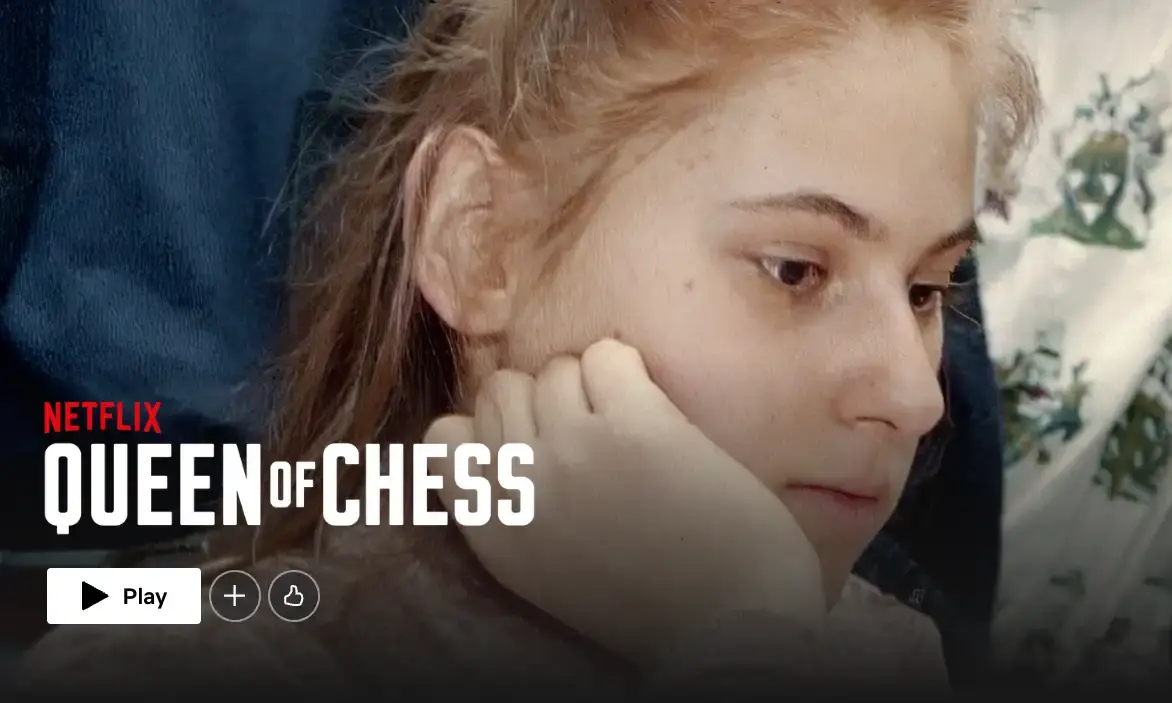
This weekend, Netflix released a long-awaited documentary on Judit Polgár, The Queen of Chess. Directed by American documentary filmmaker Rory Kennedy, whose work has consistently focused on social issues, this 93-minute film explores Judit’s career, from her upbringing to her breakthrough into the world’s chess elite.
Overall, I’d give the Judit Polgár documentary a solid 8/10, even though, as a hardcore fan, it’s hard not to call it a ten. I am very fond of Judit, and I’m genuinely happy that she received such a beautiful tribute, one that lives up to what her career and story deserve.
Sometimes, the richer the character and the story, the harder it is to condense everything into a biopic that feels coherent, enjoyable to watch, and neatly wrapped up. In that sense, the director did a very good job.
To keep the narrative moving and build toward a climactic moment, the filmmakers chose to frame Garry Kasparov as Judit’s antagonist. That choice is understandable, but there is perhaps a bit too much of him, and of their rivalry, in the story. Toning it down slightly would not have hurt the overall effect.
They really dug deep into the archives. The casual exchange between Kasparov and Susan Polgar at the opening ceremony of the 1988 Thessaloniki Olympiad was a treat, as were many photographs I had never seen before. The clips from Linares, in particular, filled me with nostalgia.
Kudos as well to Dirk Jan ten Geuzendam, Anna Rudolf, Maurice Ashley, and Jovanka Houska. Four excellent choices. Each of them is outstanding in their own right, and together they complemented each other beautifully.
I also have nothing but praise for the music department. Meghan Currier and Randall Poster as music supervisors, along with Antonio Medellín-Fajardo as orchestrator, put together a rousing girl-power soundtrack with a hint of punk that really adds dynamism to the documentary.
That said, there are a few omissions that made the story feel somewhat incomplete.
For instance, the fact that Judit was World Champion in the U14 category — in the “boys” section — probably deserved at least a mention.
It also feels odd that there is no reference at all to the summer of 1993, when Bobby Fischer spent time with the Polgár family, by which point Judit had already “dethroned” him as the greatest chess prodigy ever.
Another fascinating side story is how the three sisters developed their careers in parallel. While Judit consistently avoided women’s competitions, Susan held a different view and was happy to compete for and win women’s titles. Both have articulated strong and valid arguments for their positions. To me, this always felt like a subconscious but very pragmatic choice, one that helped prevent rivalry, jealousy, or tension from building up between them.
All in all, I just wish this documentary had been a three-episode miniseries. I could easily have watched three more hours of it, and I’m sure many of you would have too.