Added on 11/3/2025
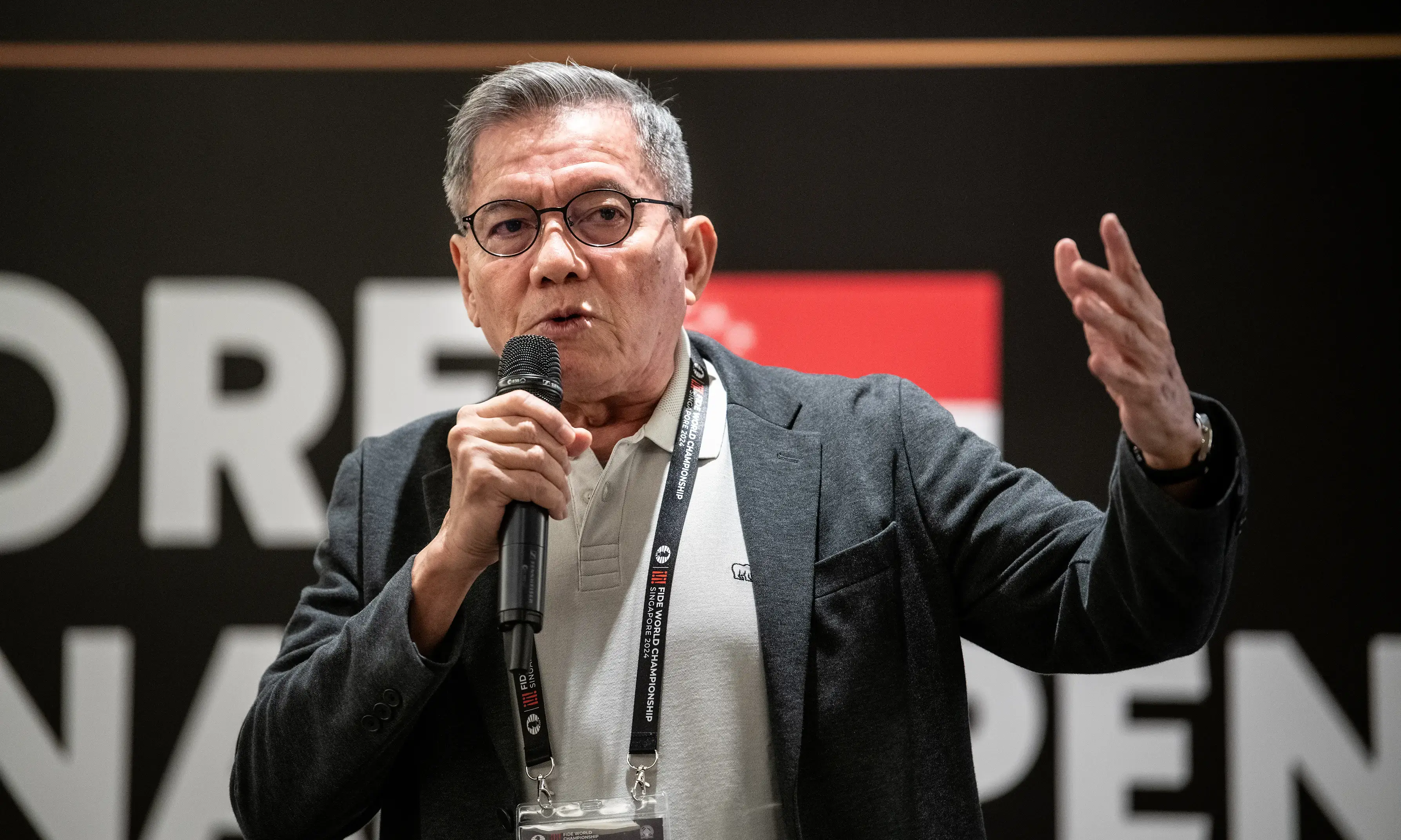
Chess legend Eugene Torre turned 74 today. Often labeled as the first Asian to earn the GM title, he was much more than that: one of the world’s top players, who reached Candidates level. His success ignited the rise of Western chess in Asia, with the Philippines at its epicenter.
by David LLada
A self-taught chess prodigy
Torre was born in Iloilo City, Philippines, as the seventh of ten siblings. He describes growing up in a “chess-playing family,” where his older brothers were already strong players. His father played a pivotal role, teaching them the basics and encouraging the family to prioritize chess over other distractions. “My parents, especially my father, were very supportive, and he wanted us to be involved in chess rather than other things,” Torre recalls.
This early immersion made chess a family bonding activity, with Torre practicing against his brothers from a young age. He was largely self-taught and did not receive any formal coaching at first. He learned the rules and strategies through sibling rivalries, which sharpened his competitive edge. “It so happened that my elder brothers were good players, so I got my practice from them.” He later put his skills to use in school competitions, where he became quite successful.
“We were on our own. Compared to the current generation, you can say that our preparation was lacking. But on the other hand, there was an abundance of mystery in chess. There was a lot that remained to be discovered. It was wonderful that chess at that time was a mystery,” he said in a 2018 interview with Sagar Shah for Chessbase. Eugene systematically wrote down his game analyses in notebooks to internalize lessons. “I believe if you write your analysis in a notebook, it stays in your head,” he told Rappler in another interview.
His international breakthrough came at the age of 17, when he tied for 4th–5th place at the 1969 World Junior Championship in Stockholm, famously won by Anatoly Karpov. That event marked the beginning of a friendly rivalry with the Soviet legend.

The perfect chess storm
Some fortuitous circumstances gave Eugene a major push, creating the perfect (chess) storm that sealed his future. The 1972 Fischer–Spassky match sparked the “chess boom 1.0” and caught the interest of President Ferdinand Marcos Sr. Although not a regular player himself, Marcos recognized chess as a low-cost tool for cultural diplomacy, national prestige, and a way to project modernity during his authoritarian rule. He played a geopolitical gambit: chess became a state-sponsored phenomenon in the Philippines, transforming from a niche pursuit into a mass spectacle.
As a result of Marcos’s support, Manila hosted the Philippine International Chess Tournament in 1973, the first major international open in Asia. Bobby Fischer was offered a $20,000 fee (an astonishing amount at the time) simply to attend the event as a personal guest of Marcos and his wife. The competition, won by Bent Larsen, was a resounding success: 25,000 people filled the Araneta Coliseum for the opening ceremony, attended by Fischer and Marcos himself.
These developments created the right conditions for Torre to consider chess as a career. Although his love for math led him to begin engineering studies at Mapúa University in Manila, he balanced school with chess until his third year, when the demands of competition and travel forced him to drop out. It is a decision he often laments, but one he views as necessary. In 2023, Mapúa University awarded him an honorary Doctor of Science degree in recognition of his contributions to chess and society.
Then came Eugene Torre’s defining moment. Leading the Filipino team at the 1974 Chess Olympiad in Nice, he delivered a spectacular performance: 9 victories, 10 draws, and no losses. This earned him the Grandmaster title, the first ever from Asia, as well as the silver medal for the second-best performance on the top board, only surpassed by Anatoly Karpov.
This achievement further fueled the Filipino chess fever. Marcos launched a $5 million bid to host the 1975 World Championship match between Fischer and Karpov, which ultimately did not come to fruition despite his good relationship with the American legend. Instead, the Philippines hosted the “Thrilla in Manila” boxing match between Ali and Frazier. Still, the country organized the 1976 FIDE Interzonal (won by Henrique Mecking) and the infamous 1978 World Championship match between Karpov and the Soviet dissident Viktor Korchnoi, which once again made headlines around the globe. The organizer of the match, Florencio Campomanes, used these events as a platform for his bid to become FIDE President, a position to which he was elected in 1982 and held for 13 years.
During the 1970s, the Philippines also hosted a series of high-profile international chess events sponsored by Philip Morris: the Manila Marlboro Classic International (1975), the Marlboro–Loyola Kings Challenge (1976), and the Marlboro Classic (1979). Eugene won the 1976 edition undefeated, scoring 4.5/6 and finishing ahead of reigning World Champion Anatoly Karpov. Even more remarkable, he handed Karpov his first defeat since becoming champion — and Karpov did not concede many defeats during his reign!
The boy from Iloilo City had grown into a world-class player. It was no surprise when he tied for first in the 1982 Interzonal Tournament in Toluca, Mexico, and reached the Candidates Matches in 1983, losing to Zoltán Ribli in the quarterfinals in Alicante, Spain.
The spark that awakened a continent
It is impossible to overstate the importance of Torre’s successful and extensive career in the development of chess in Asia, far beyond his own country. I think it is no exaggeration to say that his achievements, to a great extent, made Vishy Anand’s career possible. Vishy lived in the Philippines for about two years, from 1978 to 1980, while his father worked as a consultant for the Philippine National Railways. This coincided with the peak of chess popularity in the country. In his autobiography “Mind Master” (co-authored with Susan Ninan, Anand describes the move as fortuitous, noting how the Philippines’ vibrant chess scene offered him plenty of opportunities to play and learn—from school competitions to media exposure on the TV show Chess Today. He credits that environment with deepening his passion for the game during those formative years.
As in many other fields, a brilliant mind inspires others and opens the path for them to follow.